Why Laser Hair Removal Sometimes Fails (And How To Fix It).
⏱︎ 9 minute read.
Laser hair removal is widely considered one of the most effective methods for long-term hair reduction. Yet many clients arrive at our Auckland clinic frustrated after spending months - sometimes years - receiving treatments elsewhere with little progress, despite completing numerous appointments.
In our experience treating laser hair removal clients in Auckland, a large proportion of corrective consultations involve people who have already completed multiple treatments elsewhere with slower-than-expected reduction. In most cases, the issue is not that laser hair removal itself does not work, but that the treatment plan was never optimised in the first place - whether due to inconsistent timing, conservative settings, or limitations of the technology used.
We break down why treatments sometimes fail, and how they can be corrected, often leading to better patient outcomes moving forward.

In Brief
Laser hair removal usually works well when the treatment plan is designed correctly and supported by appropriate technology.
In our experience treating laser hair removal clients in Auckland, the most common reasons treatments fail are:
• Treatments scheduled at the wrong intervals or inconsistently
• Energy settings that are too conservative or misaligned
• Treatment plans focused on selling sessions rather than achieving results
• Inconsistent protocols without clinical governance
• Limitations of the laser technology used
When these factors are addressed, many clients who previously saw slow or disappointing results can still achieve meaningful long-term hair reduction.
Why Laser Hair Removal Usually Works
Laser hair removal works by targeting melanin (pigment) within the hair follicle.
Laser energy travels down the hair shaft and converts into heat within the follicle, damaging the cells responsible for future hair growth. Over time, repeated treatments progressively weaken the follicle’s ability to regenerate hair.
When treatments are delivered with appropriate technology, correct settings, and proper timing, medical-grade laser hair removal has an excellent track record across a wide range of skin types.
However, several key factors determine whether treatments achieve the expected outcome.
The 5 Most Common Reasons Laser Hair Removal Doesn’t Work
1. Treatments are not scheduled to match hair growth cycles
Laser works best when treatments follow the biology of hair growth — not arbitrary appointment schedules.
Hair does not grow continuously. Each follicle cycles through three stages:
• Anagen — active growth
• Catagen — transition
• Telogen — resting
Laser is most effective during the anagen phase, when the follicle is actively producing pigment and integrated with the dermal papilla.
A helpful way to visualise this is to imagine waves on a beach. Hair follicles emerge in waves - not all at once. At any given time, only a portion of the follicles in an area are actively growing.
Laser treatments must therefore be timed so each new wave of follicles and their dermal papilla can be targeted as they appear.
When treatments are spaced too far apart, scheduled inconsistently, or approached on a session-by-session basis, many follicles simply pass through their growth phase without ever being treated.
2. Treatment Settings Are Ineffectual Or Misaligned.
Laser must reach a sufficient threshold to permanently affect the follicle.
If treatment settings are incorrect or improperly aligned to the patient, the treatment may temporarily weaken the hair without permanently disabling the follicle. In worst case scenarios, incorrect power settings may actually encourage hair growth.
In either case, a laser system that has incorrect or conservative inputs can result in slower or incomplete hair reduction over time.
Additionally, in clinical practice, treatment parameters typically need to change progressively throughout a treatment course, based on:
• skin type
• hair thickness
• hair density as the treatment progresses
• how the follicle responds after each session.
At UP® Clinical Cosmetics, treatment parameters are adjusted within a structured clinical governance framework to ensure treatments remain both effective and safe.
3. Treatment Plans Focus On Sessions Instead Of Results
Consistency and timing, not the number of appointments, is the real driver of effective laser hair removal.
Another common reason for slow progress is that treatments are structured around selling individual sessions rather than achieving the best possible clinical outcome.
When treatments are purchased session-by-session, many clients delay appointments or attend inconsistently. This can cause treatments to miss key hair growth cycles and dramatically slow progress.
At UP® Clinical Cosmetics, our approach is different.
Our Unlimited treatment model allows clients to attend whenever the hair cycle is ready for treatment, rather than delaying appointments to manage per-visit costs. This allows the treatment plan to follow the biology of hair growth and helps ensure treatments occur when they are most effective.
While many clients assume that a clinically structured approach must be more expensive, with UP®, the reality is the opposite. When treatments are delivered consistently and efficiently, clients frequently complete their reduction journey sooner, which can make the overall cost less than session-based treatment models, not to mention, more enjoyable.

Clinical governance is key to achieving long-term hair reduction
4. Inconsistent Protocols Without Clinical Governance
Laser hair removal is a technical treatment that requires consistency and strong governance.
Laser hair removal is sometimes marketed as a simple cosmetic service, but in practice it is a highly technical treatment.
Effective outcomes require careful assessment of skin type, hair calibre, density, and growth patterns, along with thoughtful adjustment of treatment parameters over time.
Small differences in coverage technique, energy delivery, or treatment timing can accumulate across multiple sessions and significantly influence long-term results.
For this reason, many clients prefer clinics where treatments follow a consistent clinical protocol rather than ad-hoc sessions performed by different practitioners without overarching governance.
5. Technology Differences Between Devices
Not all laser systems deliver energy the same way.
Different technologies use different wavelengths and delivery methods, which can influence how effectively the follicle is targeted.
Unlike inexpensive diode or pulsed-light systems, clinical laser systems such as the Lumenis Splendor X combine two wavelengths — Alexandrite (755nm) and Nd:YAG (1064nm). These can be delivered individually or synchronised together in adjustable proportions, allowing treatments to be tailored for different skin tones, hair colour and characteristics.
Modern systems can also deliver energy more evenly across the treatment area.
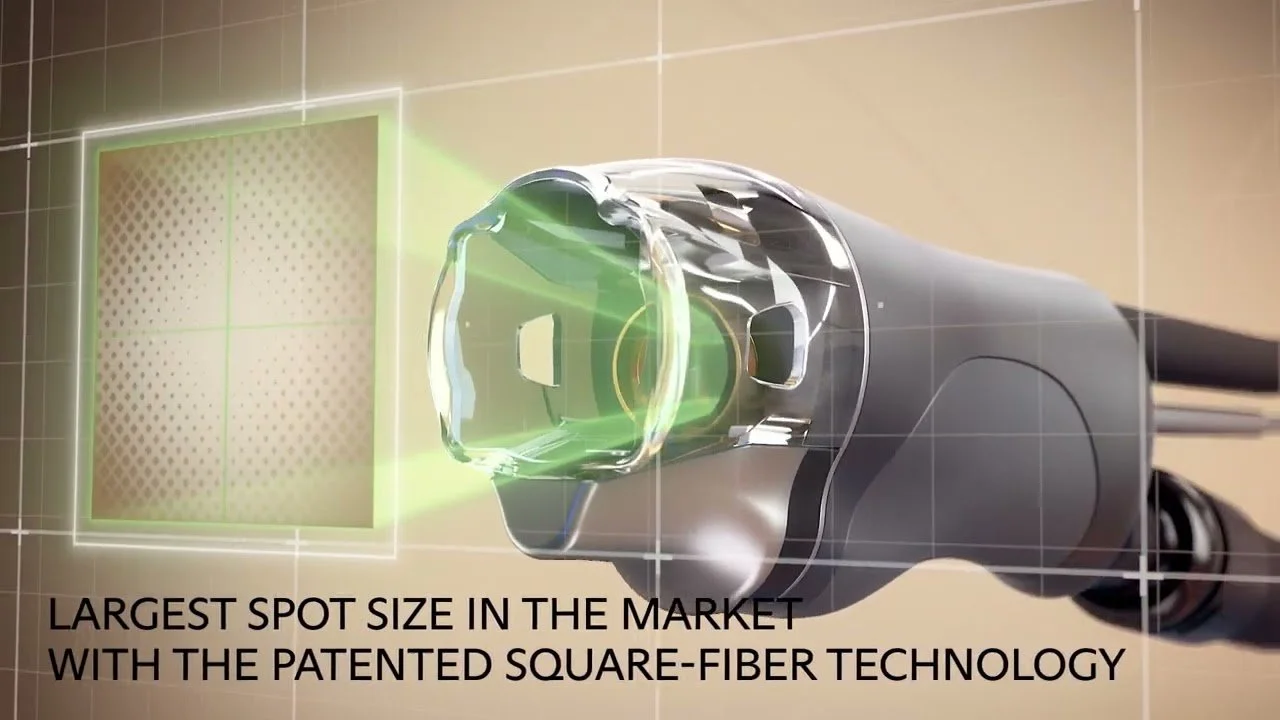
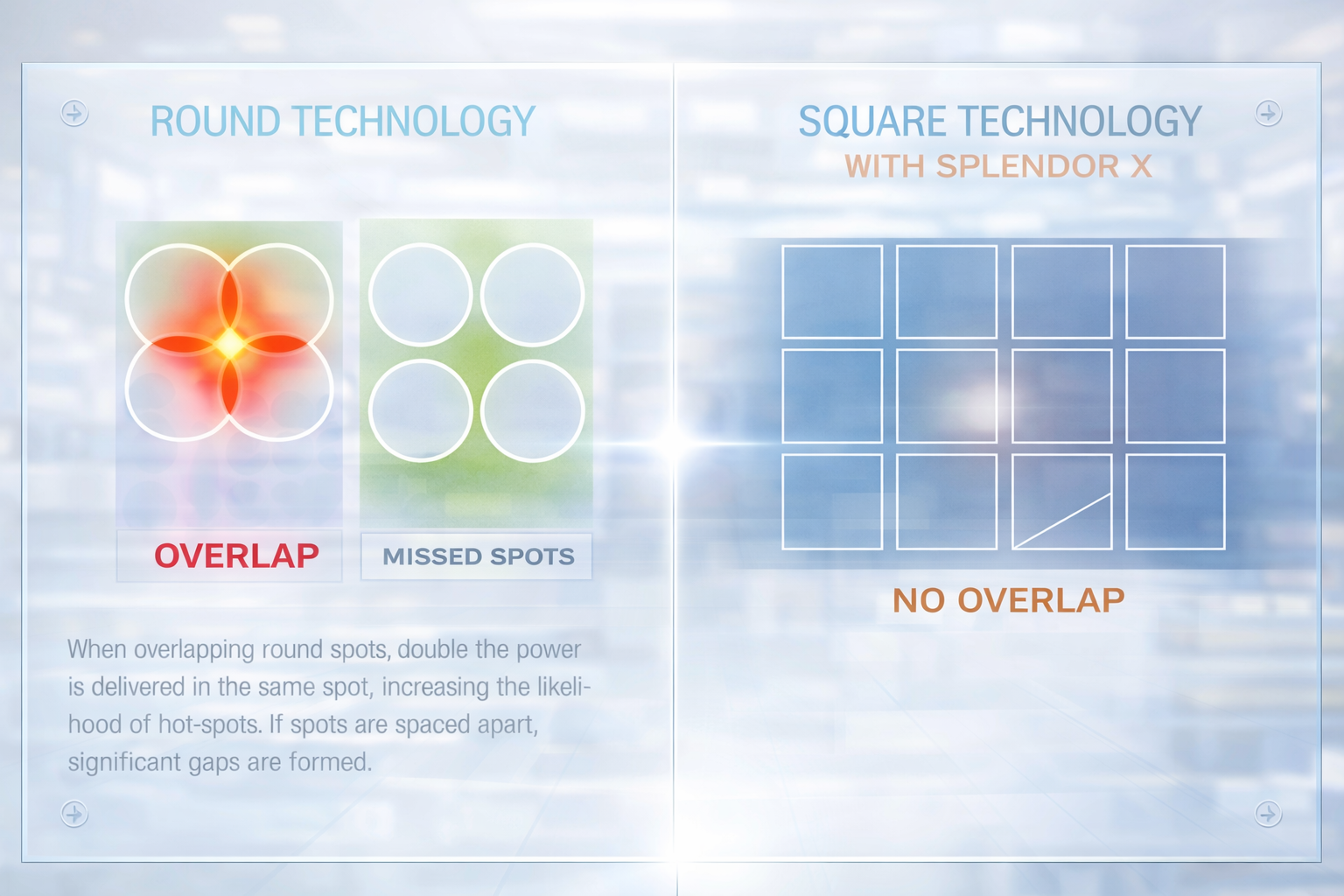
The Splendor X system, for example, uses a patented square spot design with one of the largest spot sizes available. Unlike traditional circular spot systems that require overlapping treatment areas, square-spot technology allows the treatment area to be covered evenly without gaps (leading to missed hair growth) or excessive overlap (leading to unsafe and uncomfortable hot-spots).
In practical terms, this allows experienced practitioners to treat patients efficiently while maintaining precise control over treatment parameters.
For some clients, particularly those with lighter or more difficult-to-treat hair, systems that combine Alexandrite and Nd:YAG wavelengths like the Splendor X may offer outcomes that others can’t.
Laser Failed For Me — Now What?
One of the most common questions we hear from new clients is:
“If laser didn’t work for me before, is there any point trying again?”
In many cases, the answer is yes.
Many clients come to us after disappointing experiences elsewhere, sometimes after receiving numerous treatments with limited results. Once the treatment plan is reassessed, including technology, timing, and settings, progress can often improve significantly.
As one client recently shared:
“I’ve tried two other clinics for laser hair removal and spent a ridiculous amount of money with barely any results. After just five sessions at UP, I went nearly 12 months without needing another treatment.”
— Sarah, UP® Client
While every individual responds differently, correcting the treatment strategy often produces dramatically better outcomes.
Can Laser Still Work After Previous Treatments?
In many cases, yes.
Hair follicles that have not been fully disabled may still respond to further treatments, particularly if earlier sessions were performed with conservative settings, inconsistent timing, or incorrect technology.
For some clients with lighter or more difficult-to-treat hair, systems that allow synchronised Alexandrite and Nd:YAG wavelengths, like the Splendor X, may provide better outcomes than others.
What To Look For In A Laser Hair Removal Clinic.
If you are considering laser hair removal, or looking to correct disappointing results, it is worth asking a few key questions:
• Is the clinic using modern clinical laser technology like the Splendor X?
• Is the treatment plan designed around results, not just sessions?
• Are treatments performed by consistent practitioners, with clinical governance and oversight?
• Are treatment parameters adjusted over time?
These factors can make a significant difference to the outcome of a treatment course.
Final Thoughts.
Laser hair removal remains one of the most effective options for long-term hair reduction. But like any clinical treatment, results depend on the combination of technology, timing, clinical governance, practitioner experience, and treatment planning.
In our experience treating laser hair removal clients in Auckland, many disappointing outcomes simply come down to treatments that were never optimised from the beginning.
With the right approach, many clients who previously struggled to see results can still achieve meaningful long-term reduction.
Considering Laser Hair Removal — Or Looking To Correct Previous Treatments?
If you’ve had laser treatments before and weren’t satisfied with the outcome, or if you’re considering laser hair removal for the first time, we invite you to book a consultation with our team.
At UP® Clinical Cosmetics in Auckland, we specialise in personalised treatment planning using the Lumenis Splendor X system and a structured clinical approach designed to achieve strong results safely.
Book a consultation today and we’ll help you understand what’s possible for your skin and hair type.
UP® Clinical Cosmetics is an independent Auckland laser clinic founded in 2015, specialising in advanced laser hair removal using Lumenis Splendor X technology.